Why formulas fail at scale.
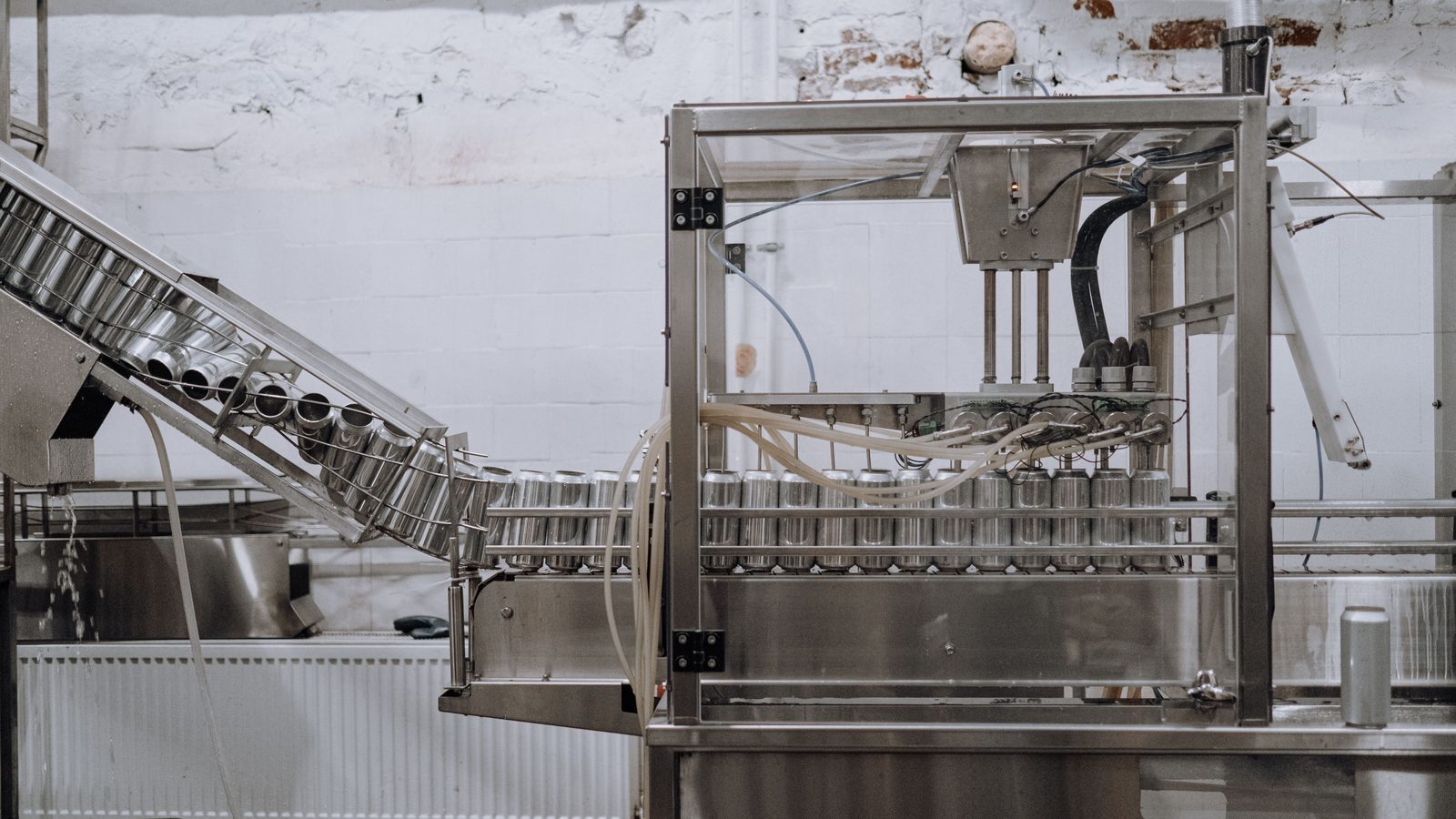
Short answer: a formula proven in a 200-gram beaker is a hypothesis, not a product. The factory applies heat, shear, and time the bench never did, at a batch size that changes the physics. Formulas fail at scale for five recurring reasons: stability that never really held, sensitivity to mixing and shear, an order of addition that breaks in a big tank, a raw material you cannot reliably buy, and a cost or claim that falls apart at volume. Each one is catchable before the run if you look for it.
The bench and the factory are different machines
On the bench, you make a small amount, at room temperature, by hand, and you watch it the whole time. A production run happens in a tank that may hold thousands of liters, heated and cooled on a schedule, mixed by an impeller that shears the product far harder than a lab stirrer, and filled on a line that expects a specific viscosity. None of that is what your beaker experienced. So behavior you never saw on the bench shows up for the first time in a batch you have already paid for.
Failure mode one: stability that only looked stable
A week on a warm shelf is not a stability program. Emulsions can hold for a month and then break. Actives can degrade slowly enough that you miss it in a short test and catch it in a customer complaint. Color and scent can drift. Real stability testing puts the product through heat, cold, light, and time that reflect how it will be shipped, stored, and used, and it does so before you commit a run, not after.
Failure mode two: heat and shear change the product
Production mixers are violent compared to a lab. High shear can thin a gel that seemed thick, invert an emulsion, or damage an ingredient that was fine when stirred gently. Heat needed to melt a phase at scale can push a sensitive active past its limit. The formula did not change on paper, but the process it now lives in did, and the product behaves differently because of it.
Failure mode three: order of addition breaks in a big tank
On the bench you can add things quickly and adjust as you go. In a large vessel, each addition takes time, temperatures lag, and you cannot undo a step. A sequence that worked in grams can trap air, form lumps, or seed crystals when it is run in tonnes. The fix is usually simple once you know to look, and expensive once a batch is ruined.
Failure mode four: a raw material you cannot actually get
A formula is only as reliable as its supply chain. A hero ingredient with one supplier, a long lead time, or big lot-to-lot variation is a risk hiding in plain sight. It may be fine for a sample and a problem for a launch. Checking availability, second sources, and consistency is part of making a formula producible, not an afterthought.
Failure mode five: cost and claims fall apart at volume
Margins that work at sample quantities can vanish when you buy and make at scale, especially if the formula leans on an expensive active to hit a claim. And a claim that was never pinned to real testing can become a compliance problem once the product is on shelves in multiple markets. Both are cheaper to solve on the bench than in a recall.
How to catch it before the run
The pattern behind all five is the same: the formula was judged on how it performed, not on how it would be made. The way to avoid it is to review the formula against production reality before you schedule a batch. That is exactly what a Scale-Readiness Audit does: it scores the formula across these areas, maps where the risk sits, and gives you a ranked list of what to fix first.
How early should I check for scale-up risk?
My contract manufacturer says it's fine. Do I still need a review?
Is this only for large brands?
Check your own formula.
The Scale-Readiness Scorecard walks you through these five areas so you can see where your risk sits. It takes a few minutes.